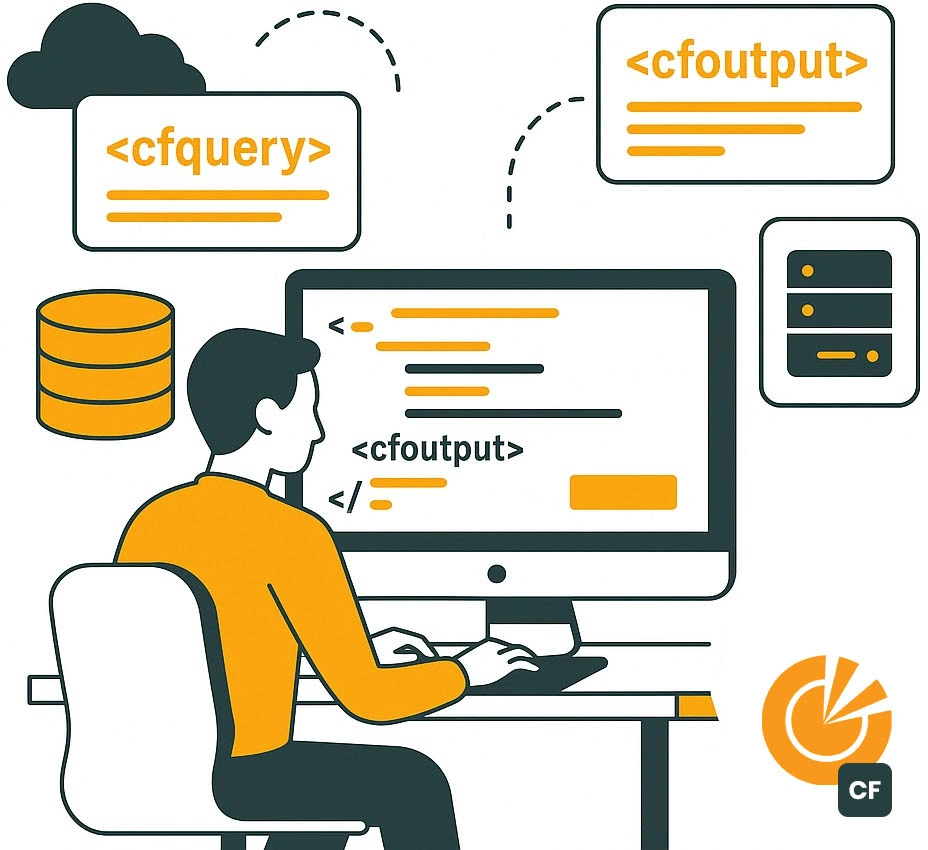
If you own or manage an application built on ColdFusion, you have probably typed some version of the same question into a search box more than once this year. The system has run your business for a decade or longer, it still works every morning, and yet a quiet doubt returns each time the technology budget comes up for review. Owners keep asking is ColdFusion still used 2026 because they want an honest answer before deciding whether to keep investing in the platform they already depend on. This page answers that question directly, without the scare tactics that push businesses toward expensive rewrites they may never need.
Free Consultation
Please fill in the fields below. All fields are required.
CTO (Cipoletti Technology Organization) / sales@cipoletti.ai / 888-CTO-0206 / 1636 N. Cedar Crest Blvd / Allentown PA 18104
<CTO> | <Cybersecurity> | <AI> | <Websites> | <IT> | <ColdFusion> | <Programming>
ColdFusion: <Development Services> | <AI Integration> | <PDF Automation>
CTO (Cipoletti Technology Organization) works with organizations that run real, revenue-generating software on ColdFusion, and the team hears the same concern constantly. A consultant somewhere told the owner the language was finished. A new hire only knows JavaScript and wants to start over. A vendor quoted a six-figure rebuild. None of those pressures actually answer the underlying question, which is whether the platform is alive, supported, and safe to build on for the years ahead. The short version is that ColdFusion is actively developed, commercially supported, and still running mission-critical systems for governments, hospitals, banks, and enterprises around the world.
Let us be specific about what the doubt really is. When someone searches is ColdFusion still used 2026, the fear underneath the phrase is usually one of three things: that the platform is abandoned and will stop receiving updates, that nobody can be hired to maintain it, or that staying on it makes the business look outdated. Each of those fears deserves a real response rather than a sales pitch, and each one falls apart under a close look at where the platform actually stands today. The goal of this page is to replace rumor with fact so you can make a calm, informed decision about software your business already relies on.
ColdFusion did not quietly disappear; it moved out of the spotlight while continuing to run the kind of software that rarely gets discussed at conferences. Government agencies use it for permitting, licensing, benefits, and case management systems. Healthcare organizations run patient portals, scheduling, and internal administrative tools on it. Financial institutions use it for account servicing, reporting, and back-office workflows where stability matters far more than fashion. Universities, insurers, manufacturers, and logistics companies all keep ColdFusion applications in production because those applications work, hold years of business logic, and would be costly and risky to recreate. Anyone still asking is ColdFusion still used 2026 is, in many cases, already using software built on it without realizing the platform underneath.
The reason these systems endure is straightforward. A mature ColdFusion application often encodes a decade or more of refined business rules, edge cases, and integrations that were learned the hard way. That accumulated logic is the real asset, not the language it happens to be written in. Throwing it away to chase a trendier stack means rediscovering every one of those lessons in a new language, usually over budget and behind schedule. The organizations that keep their applications running understand that the platform is doing exactly what it was chosen to do, quietly and reliably, year after year.
The single most important fact for anyone weighing this decision is that ColdFusion is not frozen in time. Adobe continues to ship new major versions, with the 2025 release adding meaningful capability and the surrounding tooling receiving steady updates. The open-source engine Lucee gives teams a second, actively maintained option for running CFML, which means the language itself has more than one healthy implementation behind it. This is not the profile of a dead platform. A truly abandoned technology stops receiving security patches, stops getting new features, and loses its commercial backer. None of that has happened here, which is why the honest response to is ColdFusion still used 2026 is a confident yes rather than a hedge.
Support roadmaps matter as much as feature lists for a business making a long-term call. Current ColdFusion releases carry defined support windows with ongoing security updates, and the upgrade path between versions is well understood. An application running on an older release can be brought current without a ground-up rewrite, preserving the business logic while restoring full support and a modern security posture. For owners who have let a version slip out of date, that modernization path is usually far cheaper and faster than the rebuild a migration vendor would propose. CTO helps clients map exactly where their version sits on the roadmap and what a sensible upgrade actually looks like in practice.
Perhaps the clearest signal that the platform is moving forward, not winding down, is the investment in native artificial intelligence capability. Recent ColdFusion development has focused on building AI directly into the platform, giving CFML developers a supported way to call large language models, work with embeddings, and add intelligent features without leaving the framework they already know. A platform that is being abandoned does not receive a brand-new AI framework. That investment tells owners something important about Adobe's commitment and about the platform's relevance going into the next several years. It also means a ColdFusion application can gain modern AI features as an enhancement to what already exists, a topic CTO covers in depth through its ColdFusion AI integration services.
This matters for the worried owner because it reframes the entire question. Instead of asking whether the platform can survive, the better question becomes what the platform can now do that it could not a few years ago. Many of the people who once searched is ColdFusion still used 2026 out of anxiety are now asking what new capabilities they can add to a system they no longer have any reason to abandon. The answer increasingly includes the same AI-driven features businesses are adding everywhere else, delivered inside the system they already trust. That is the opposite of obsolescence.
The sectors that lean hardest on ColdFusion share a common profile: they run complex, long-lived applications where reliability and data integrity outweigh the appeal of the newest framework. Government bodies value the platform's stability and the longevity of systems that must serve the public for years without disruption. Healthcare organizations appreciate how well it handles the data-heavy, form-driven, integration-rich workloads that define clinical and administrative software. Financial services firms rely on its proven handling of transactions, reporting, and document generation. These are not nostalgic holdouts; they are organizations making a rational choice to protect working systems. For decision-makers in those fields, the question is rarely is ColdFusion still used 2026 in the abstract and far more often a practical matter of how to keep a critical system healthy and current.
Document-heavy industries get particular value from the platform's built-in strengths. ColdFusion has long handled PDF generation, manipulation, and processing natively, which is why so many reporting, invoicing, and records systems were built on it in the first place. Combined with modern AI, that document capability becomes even more powerful, an area CTO addresses directly through its ColdFusion PDF automation with AI work. A business sitting on a mountain of manual document processing often finds that its existing platform is the ideal place to automate it rather than a reason to walk away.
The claim that the language is dead spreads for predictable reasons, and none of them reflect the platform's actual health. Newer developers gravitate toward whatever languages dominate job postings and online tutorials, so unfamiliarity gets mistaken for extinction. Consultants and agencies have a financial incentive to recommend rebuilds, because a migration project bills far more hours than maintaining a stable application. Loud online opinions reward dramatic takes over measured ones. Strip away those incentives and the reality is plain: the platform is supported, patched, improved, and widely deployed. The gap between the myth and the facts is exactly why so many people end up searching is ColdFusion still used 2026 in the first place, having heard the rumor and wanting the truth behind it.
Hiring is the one legitimate concern inside the myth, and it deserves a straight response rather than dismissal. The pool of CFML developers is smaller than the pool for the most popular mainstream languages, which is real. But smaller is not the same as nonexistent, and experienced ColdFusion talent remains available through firms that specialize in the platform. Working with a partner that maintains that expertise removes the staffing worry entirely, because the knowledge lives with the firm rather than depending on a single internal hire who might leave. That is precisely the gap CTO fills for organizations that want to keep their applications without building an in-house CFML team. The same skills extend naturally into broader custom software development Allentown and web application development Allentown work whenever a system needs to grow beyond its original scope.
Every owner weighing this question eventually faces three options, and the right one depends on the specific application rather than on a blanket rule. The first option is to keep the system as it is, maintaining and supporting it while it continues to serve the business. The second is to modernize, upgrading the version, refreshing the interface, tightening security, and adding new capability such as AI features while preserving the core logic. The third is to leave the platform entirely through a full rewrite on a different stack. For most healthy applications, the honest answer to is ColdFusion still used 2026 leads directly toward keeping or modernizing rather than leaving, because the rewrite option carries the most cost and the most risk for the least guaranteed benefit.
Keeping an application as it stands is the right call more often than rebuild advocates admit. If the system meets the business need, runs reliably, and sits on a supported version, there is little reason to disturb it. Software does not expire simply because it has been in service for years. A stable, well-understood ColdFusion application that quietly does its job is an asset, not a liability, and the smartest move is often to maintain it well and leave it alone. CTO provides that ongoing maintenance so owners can stop worrying about whether is ColdFusion still used 2026 and simply keep relying on what works, with someone qualified watching over its health, security, and uptime.
Modernizing is the right path when the application still holds valuable logic but has fallen behind in some visible way, whether an outdated version, an aging interface, or a lack of the features the business now wants. Modernization keeps the years of accumulated business rules intact while bringing the system current, and it costs a fraction of a full rewrite. Upgrading to a supported release restores security and support. Refreshing the front end improves how staff and customers experience the system. Extending the application through ongoing ColdFusion development services or with ColdFusion PDF automation with AI adds capability the original build never had. This middle path delivers most of the benefit owners imagine from a rewrite at a far lower cost and risk, which is why CTO recommends it so frequently. It pairs well with focused database development Allentown when the data layer also needs attention, and with ongoing ColdFusion development services when the application needs a full team behind it rather than one developer.
A full rewrite is the most expensive and most disruptive option on the table, and it rarely delivers a return that justifies the spend for a system that already works. Rebuilding means re-specifying every feature, re-implementing years of business logic, re-testing every edge case, and accepting months of risk while the new system catches up to what the old one already did flawlessly. Keeping or modernizing avoids almost all of that. The accumulated logic stays in place, the disruption is minimal, and the budget goes toward genuine improvement rather than rebuilding ground that was already covered. When the numbers are laid out plainly, the case for staying on and improving a working ColdFusion application is usually far stronger than the case for starting over. A rewrite also resets the clock on user trust, forcing staff and customers to relearn a system they had already mastered.
A working application is only worth keeping if it can stay secure, and this is another area where the platform holds up well. Current releases receive regular security updates, and a properly maintained ColdFusion environment can be hardened to meet the same standards expected of any modern web application. The risks people imagine when they ask is ColdFusion still used 2026 usually trace back to neglected, unpatched, end-of-life installations rather than to anything inherent in the platform itself. An out-of-date version left untouched for years will accumulate vulnerabilities, exactly as an out-of-date system on any other stack would. Bring it current, apply the updates, and follow sound configuration practices, and the application is as defensible as anything newer on the market. CTO handles that hardening and patching so security never becomes the reason a perfectly healthy system gets abandoned before its time.
Longevity is the final piece of the decision, and it points the same direction as everything else on this page. A platform with active development, a published support roadmap, two healthy engine options, native AI capability, and deep entrenchment across government, healthcare, and finance is not a platform on its way out. It is a mature, stable foundation that will keep running and keep improving for years to come. That durability is precisely what makes it a sensible place to keep investing rather than a sunk cost to escape from in a panic. The businesses that understand this stop treating their systems as a problem to be solved and start treating them as the dependable, productive assets they have always quietly been.
The general question has a clear answer, but your specific situation deserves a specific one. Whether keeping, modernizing, or improving your system is the right move depends on the application, its version, its condition, and what the business needs from it next. CTO helps owners cut through the noise and the rumors with an honest assessment of where their ColdFusion application stands and what the practical options are, free of any pressure toward an unnecessary rewrite. If you have been quietly wondering is ColdFusion still used 2026 and what that means for the system your business depends on, the next step is a straightforward conversation about keeping and improving what you already have. Reach out to CTO to talk through your application, your roadmap, and the path that makes the most sense, drawing on the same leadership-level guidance behind its CTO consulting Allentown and the practical engineering depth of its AI development Allentown practice.
Free Consultation
Please fill in the fields below. All fields are required.
CTO (Cipoletti Technology Organization) / sales@cipoletti.ai / 888-CTO-0206 / 1636 N. Cedar Crest Blvd / Allentown PA 18104